

Star Trek: Discovery / Strange New Worlds · Virtual production
Star Trek: Discovery / Strange New Worlds — virtual production at scale
Bringing environment decisions forward into photography, so filmmakers work with more of the final image on the day.
In brief
- Production
- Star Trek: Discovery / Strange New Worlds · Virtual production
- Leadership involved
- Jason Zimmerman — Visual effects supervisor across the franchise's Discovery and Strange New Worlds work
- The problem
- Two concurrent series, each with its own visual identity, both requiring large-scale environments on episodic dates. Pushing every environment into post is slow, expensive and takes the world away from the actors and the cinematographer on the day.
- The approach
- A large LED volume was brought into the production plan as one tool among several. American Cinematographer's coverage of Strange New Worlds documents a 70ft by 30ft horseshoe-shaped volume, using ROE Visual Black Pearl BP2 2.8mm panels for the walls and Carbon CB5 5.77mm panels for the ceiling, fed by Brompton Tessera SX40 processors outputting real-time content from Unreal Engine, with OptiTrack cameras handling multi-camera tracking. The same volume was used for Discovery's LED-wall work.
- The result
- Actors and camera working against real, lit environments during photography rather than against empty blue.
- Interactive lighting coming from the environment itself, as described by the show's cinematographer.
- Environment decisions taken in prep, where they are cheapest to change, and more of the final image available in camera.
- The lesson
- Volume or not is a per-scene decision, decided on the story.
Summarised from the sourced detail below. Full narrative and attribution follow.
Antique Robots team members involved
Jason Zimmerman
Visual effects supervisor across the franchise's Discovery and Strange New Worlds work
This production predates Antique Robots. It is listed as production experience carried by the people named above, not as work produced by the company.
The challenge
Two concurrent series, each with its own visual identity, both requiring large-scale environments on episodic dates. Pushing every environment into post is slow, expensive and takes the world away from the actors and the cinematographer on the day.
As Zimmerman has put it, the work is always story-driven, and each show also has its own identity and its own set of sensibilities visually — so scale alone was never the goal.
The approach
A large LED volume was brought into the production plan as one tool among several. American Cinematographer's coverage of Strange New Worlds documents a 70ft by 30ft horseshoe-shaped volume, using ROE Visual Black Pearl BP2 2.8mm panels for the walls and Carbon CB5 5.77mm panels for the ceiling, fed by Brompton Tessera SX40 processors outputting real-time content from Unreal Engine, with OptiTrack cameras handling multi-camera tracking. The same volume was used for Discovery's LED-wall work.
Environments were treated as production design rather than as backdrops. Cinematographer Magdalena Górka, ASC, PSC has described lighting with the wall — designing the lighting directly into the screen content as a starting point — and credits production designer Jonathan Lee and Pixomondo for the environment designs.
The process
Environment development moved earlier. Virtual art department work, previs and asset building had to be finished to a shootable standard before the stage day, not after it, because the content is both the background and part of the lighting.
The decision to use the volume was made scene by scene, weighed against page count and screen time, with the wall used both as a large fixed backing and as a live, tracked environment — and greenscreen still used where it was the better answer.
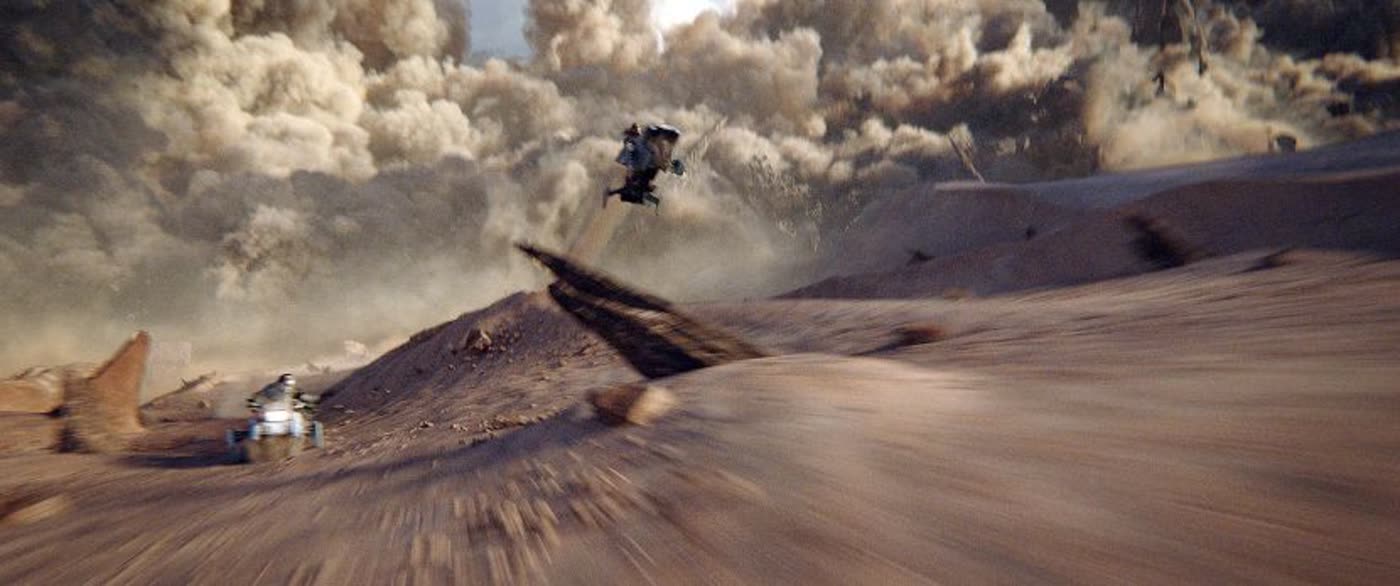
Assets were built at genuine scale where the story required it. Zimmerman has described Discovery's Breen ship as the largest asset the team had built — around ten kilometres of digital environment — and has described sending a survey team to a desert in north-eastern Brazil to build a sequence environment before it was lit and photographed on the volume.
None of this removed departments. It reordered them: design, cinematography, VFX and the virtual art department made their decisions together, further upstream than a conventional post-heavy schedule allows.
What it enabled
- Actors and camera working against real, lit environments during photography rather than against empty blue.
- Interactive lighting coming from the environment itself, as described by the show's cinematographer.
- Environment decisions taken in prep, where they are cheapest to change, and more of the final image available in camera.
Why it matters to Antique Robots
Virtual production is a filmmaking tool, not a replacement for locations, sets, designers, cinematographers or artists. It earns its place when it puts more of the picture in front of the people making it.
The discipline that matters is knowing when not to use it — and having that judgement inside the production, held by the people who also carry the shots that do not go on the wall.
Key principles
- Volume or not is a per-scene decision, decided on the story.
- If it is on the wall, it must be finished before the shoot day.
- The environment is a lighting instrument as much as a background.
- Upstream collaboration is the whole benefit; skip it and you have an expensive backdrop.
Sources
Direct interview · fxguide
Jason Zimmerman on the VFX of Star Trek Discovery & Strange New Worlds
Mike Seymour · 4 June 2024 · Jason Zimmerman, VFX supervisor
https://www.fxguide.com/fxfeatured/jason-zimmerman-on-the-vfx-of-star-trek-discovery-strange-new-worlds/Trade publication · American Cinematographer
Boldly Going Virtual with Star Trek: Strange New Worlds
Noah Kadner · 24 June 2022 · Magdalena Górka, ASC, PSC, cinematographer
https://theasc.com/article/boldly-going-virtual-star-trek-strange-new-worlds/Official vendor source · ROE Visual
Star Trek: Discovery season 4 deploys ROE Visual to create background scenery
14 October 2021
https://www.roevisual.com/en/news-and-events/news/star-trek-discovery-season-4-deploys-roe-visual-to-create-background-scenery