

Toronto virtual-production stage · Production infrastructure
Feature-scale worlds on episodic schedules
What it takes, on the production side, to make a permanent LED volume behave like part of the filmmaking process rather than a piece of equipment.
In brief
- Production
- Toronto virtual-production stage · Production infrastructure
- Leadership involved
- Jason Zimmerman — Oversaw the production-side implementation and process of integrating the virtual-production wall into the filmmaking pipeline
- The problem
- How do you repeatedly create large, cinematic worlds against episodic schedules and production realities without pushing everything into post?
- The approach
- Jason Zimmerman oversaw the production-side implementation of the wall and its integration into the filmmaking process — the process work of making the stage usable by a running television production. This is first-party information supplied by Jason; the stage technology itself was designed, built and operated by the production's partners.
- The result
- Large-scale environments created on stage, with control over the conditions of the shot.
- Interactive lighting from the environment, and actors performing against a world they can see.
- Environment decisions moved into prep, where iteration is faster and cheaper than it is in post.
- The lesson
- Technology is a production process problem before it is a technical one.
Summarised from the sourced detail below. Full narrative and attribution follow.
Antique Robots team members involved
Jason Zimmerman
Oversaw the production-side implementation and process of integrating the virtual-production wall into the filmmaking pipeline
This production predates Antique Robots. It is listed as production experience carried by the people named above, not as work produced by the company.
The challenge
How do you repeatedly create large, cinematic worlds against episodic schedules and production realities without pushing everything into post?
A stage answers that only if the production process around it changes too. The technology exists whether or not the pipeline is ready for it.
The approach
Jason Zimmerman oversaw the production-side implementation of the wall and its integration into the filmmaking process — the process work of making the stage usable by a running television production. This is first-party information supplied by Jason; the stage technology itself was designed, built and operated by the production's partners.
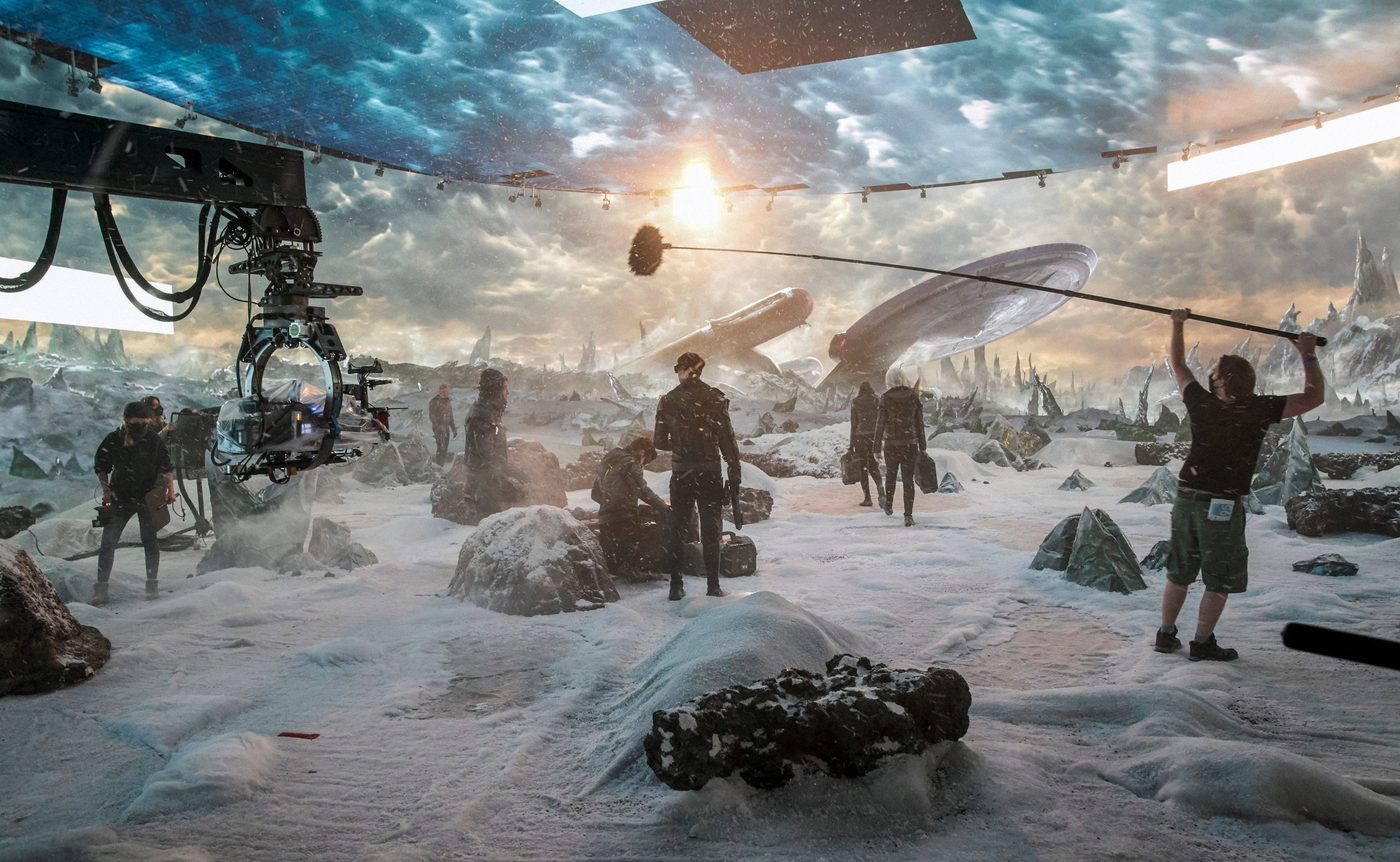
The stage was a co-branded Pixomondo and William F. White facility in Toronto. American Cinematographer documents the volume as a 70ft by 30ft horseshoe using ROE Visual Black Pearl BP2 2.8mm wall panels and Carbon CB5 5.77mm ceiling panels, driven by Brompton Tessera SX40 processors from Unreal Engine, with OptiTrack multi-camera tracking. ROE Visual's own announcement confirms the Pixomondo and William F. White arrangement and its use from Discovery's fourth season.
The process
Environment development moves earlier. Worlds intended for the wall have to be built, approved and optimised before the shoot day, which pulls design and VFX decisions forward into prep.
Production, VFX and virtual production coordinate before photography rather than at the stage door — scheduling, asset readiness, tracking and content review all become prep deliverables.
Practical foregrounds are built to meet the environment, so the cast and camera have something physical in the front of frame.
Environments provide interactive lighting; the show's cinematographer has described designing lighting directly into the screen content as a starting point.
Real-time tracked environments let actors and filmmakers see more of the world while they are photographing it.
The stage is used where it makes production sense. It is one option in the plan, alongside location, build and post.
What it enabled
- Large-scale environments created on stage, with control over the conditions of the shot.
- Interactive lighting from the environment, and actors performing against a world they can see.
- Environment decisions moved into prep, where iteration is faster and cheaper than it is in post.
- Repeatable access to that scale across an episodic run.
Why it matters to Antique Robots
Infrastructure is not a strategy. The production process around it is. The value came from filmmakers, departments and schedules being reorganised so a real-time environment could be treated as part of photography.
That is exactly the work Antique Robots does: not selling a stage, but building the production model that makes a tool worth its place in the schedule.
Key principles
- Technology is a production process problem before it is a technical one.
- If it is going on the wall, it belongs in prep.
- Build practical foreground; the volume is not the whole frame.
- Use the stage where it makes production sense, not universally.
Sources
First-party (Antique Robots) · Antique Robots
First-party statement on production-side implementation of the Toronto volume
Jason Zimmerman
Trade publication · American Cinematographer
Boldly Going Virtual with Star Trek: Strange New Worlds
Noah Kadner · 24 June 2022 · Magdalena Górka, ASC, PSC, cinematographer
https://theasc.com/article/boldly-going-virtual-star-trek-strange-new-worlds/Official vendor source · ROE Visual
Star Trek: Discovery season 4 deploys ROE Visual to create background scenery
14 October 2021
https://www.roevisual.com/en/news-and-events/news/star-trek-discovery-season-4-deploys-roe-visual-to-create-background-sceneryOfficial vendor source · ROE Visual
Entering Star Trek: Strange New Worlds with ROE Visual LED technology
https://www.roevisual.com/us-en/news-and-events/news/entering-star-trek-with-roe-visual-led-technologyDirect interview · fxguide
Jason Zimmerman on the VFX of Star Trek Discovery & Strange New Worlds
Mike Seymour · 4 June 2024 · Jason Zimmerman, VFX supervisor
https://www.fxguide.com/fxfeatured/jason-zimmerman-on-the-vfx-of-star-trek-discovery-strange-new-worlds/