

The Day · Feature film · 2011
The Day — making the constraints part of the movie
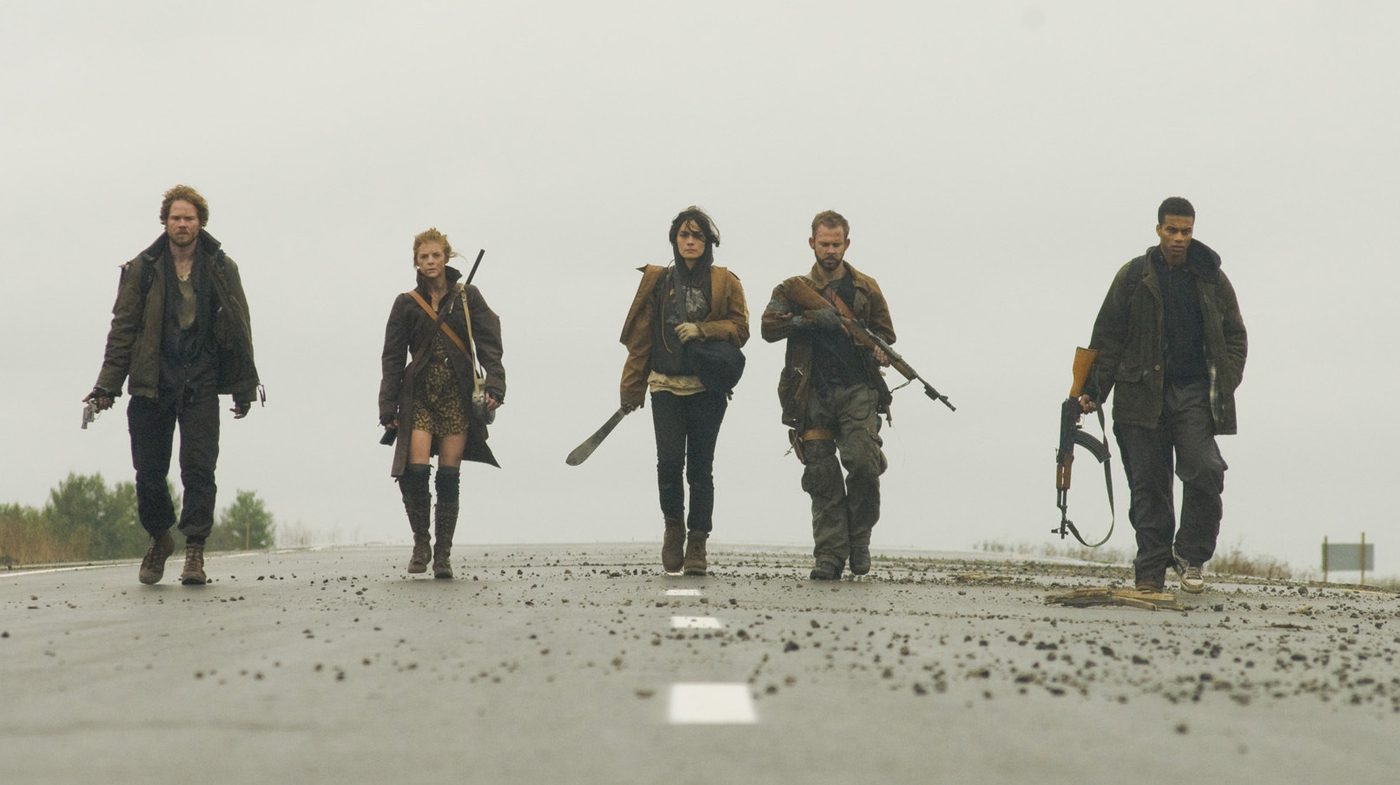
A feature directed on real locations in punishing conditions, where the physical circumstances of the shoot became part of the film's character.
In brief
- Production
- The Day · Feature film · 2011
- Leadership involved
- Doug Aarniokoski — Director
- The problem
- A contained, character-driven survival film with a hard resource ceiling, a compressed schedule and a second half that plays as one sustained siege in effectively one location.
- The approach
- He committed to the material fast — he has said he read the script in about forty minutes, called the producer and said he had to make it — and then committed the production to real places rather than controlled ones.
- The result
- A finished feature whose physical realism reads on screen because it was photographed, not manufactured.
- A production that used its constraints — location, weather, containment — as the tonal identity of the film rather than fighting them.
- A festival premiere at Toronto's Midnight Madness programme in September 2011.
- The lesson
- Constraints are material. Use them or they use you.
Summarised from the sourced detail below. Full narrative and attribution follow.
Antique Robots team members involved
Doug Aarniokoski
Director
This production predates Antique Robots. It is listed as production experience carried by the people named above, not as work produced by the company.
The challenge
A contained, character-driven survival film with a hard resource ceiling, a compressed schedule and a second half that plays as one sustained siege in effectively one location.
Aarniokoski has described the directing problem in his own words: it is difficult to shoot in a box, metaphorically and physically, and the challenge was keeping roughly forty-five minutes of relentlessness interesting.
The approach
He committed to the material fast — he has said he read the script in about forty minutes, called the producer and said he had to make it — and then committed the production to real places rather than controlled ones.
Locations were scouted across the United States and Canada before the production settled on Ottawa, which he described as isolated, desolate and harsh: exactly the world the story needed.
He has framed the film as a story about choices rather than as a genre exercise, and pointed to the second half's siege structure as a deliberate lineage from Assault on Precinct 13 and Straw Dogs.
The process
The conditions were not simulated. Aarniokoski has described the shoot bluntly as freezing, on a schedule that came down to eating, sleeping and working, with the cast on set all day, every day, in extreme conditions.
That demanded casting for commitment as much as for performance: an ensemble willing to live in the weather for the length of the shoot, because the cold in the frame is the cold the actors were in.
Action was staged to serve character. The film's pressure comes from what each person decides under it — he has singled out Michael Eklund's father character, whose choice was to feed his family, as the axis of the film's moral logic.
Craft direction came out of his own training. He credits Robert Rodriguez for a pick-up-the-camera-and-go working method and Terry Gilliam, from his time as an assistant director, for thinking around the obvious solution.
What it enabled
- A finished feature whose physical realism reads on screen because it was photographed, not manufactured.
- A production that used its constraints — location, weather, containment — as the tonal identity of the film rather than fighting them.
- A festival premiere at Toronto's Midnight Madness programme in September 2011.
Why it matters to Antique Robots
This one exists to make a simple point: the people behind Antique Robots make movies. Before any conversation about volumes, pipelines or AI-assisted workflow, there is a director who has stood in an Ottawa winter with a cast and a schedule and got the picture.
Constraint literacy is the skill that carries. Knowing what a location will cost you in hours, what an actor can sustain, and which limitation can be turned into the identity of the film is the same judgement that decides, years later, whether a sequence belongs on a stage or on a location.
Key principles
- Constraints are material. Use them or they use you.
- Cast for commitment when the conditions are the co-star.
- Action is only as strong as the choice underneath it.
- Real places give you something you cannot budget for later.
Sources
Direct interview · TIFF Midnight Madness blog
Interview with Douglas Aarniokoski, director of The Day
September 2011 · Doug Aarniokoski, director
http://tiffmidnightmadness.blogspot.com/2011/09/interview-with-douglas-aarnioski.htmlDirect interview · Bloody Disgusting
Interview: Director Doug Aarniokoski talks keeping the audience on their toes throughout The Day
Evan Dickson · 28 August 2012 · Doug Aarniokoski, director
https://bloody-disgusting.com/news/3188608/interview-director-doug-aarniokoski-talks-keeping-the-audience-on-their-toes-throughout-the-day-nurse-3d/