

Star Trek: Starfleet Academy · Paramount+ · 2026
Starfleet Academy — virtual production and visual effects
Jason Zimmerman discusses Star Trek: Starfleet Academy in American Cinematographer's February 2026 issue, and breaks down the season's visual effects on the befores & afters podcast.
In brief
- Production
- Star Trek: Starfleet Academy · Paramount+ · 2026
- Leadership involved
- Jason Zimmerman — Visual effects supervisor
- The problem
- The inaugural season combines virtual production, digital characters, space sequences and motion graphics — the subjects Jason Zimmerman discusses in his befores & afters interview.
- The approach
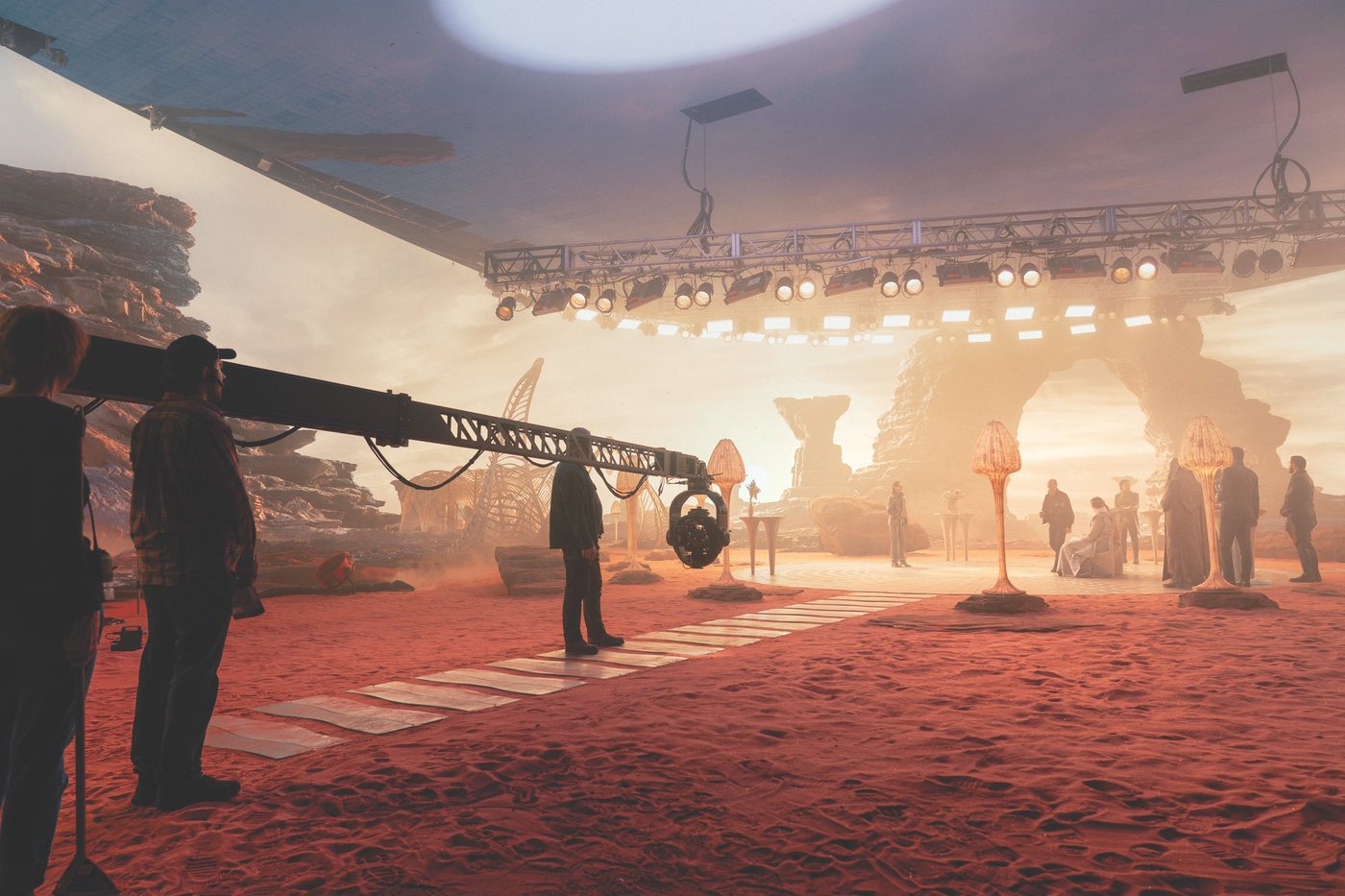
- American Cinematographer's February 2026 issue covers the inaugural season with cinematographers Tommy Maddox-Upshaw, ASC, Maya Bankovic, CSC and Philip Lanyon, CSC, showrunner Alex Kurtzman and Jason Zimmerman. The issue's behind-the-scenes photography shows the crew working inside the production's LED volume at Pinewood Toronto Studios.
- The result
- The published interviews cover the inaugural season's cinematography and visual effects, including LED-wall shooting, character work, space sequences and screen graphics.
- The lesson
- Virtual production and LED-wall shooting
Summarised from the sourced detail below. Full narrative and attribution follow.
Antique Robots team members involved
Jason Zimmerman
Visual effects supervisor
This production predates Antique Robots. It is listed as production experience carried by the people named above, not as work produced by the company.
The challenge
The inaugural season combines virtual production, digital characters, space sequences and motion graphics — the subjects Jason Zimmerman discusses in his befores & afters interview.
The approach
American Cinematographer's February 2026 issue covers the inaugural season with cinematographers Tommy Maddox-Upshaw, ASC, Maya Bankovic, CSC and Philip Lanyon, CSC, showrunner Alex Kurtzman and Jason Zimmerman. The issue's behind-the-scenes photography shows the crew working inside the production's LED volume at Pinewood Toronto Studios.
The process
On the befores & afters podcast, Zimmerman breaks down the season's main visual effects challenges: the approach to virtual production and LED-wall shooting, the character work — including Almond Basket and Rok-Tahk — and the show's space scenes and motion graphics.
What it enabled
- The published interviews cover the inaugural season's cinematography and visual effects, including LED-wall shooting, character work, space sequences and screen graphics.
Why it matters to Antique Robots
The coverage connects virtual production with the wider visual-effects work required to bring a new Star Trek series to the screen.
Key principles
- Virtual production and LED-wall shooting
- Digital characters
- Space sequences and screen graphics
Sources
Trade publication · American Cinematographer
Inside the February 2026 Issue of American Cinematographer
ASC Staff · 22 January 2026 · Issue announcement naming Jason Zimmerman among the interviewees
https://theasc.com/news/american-cinematographer-february-2026-issue/Trade publication · American Cinematographer
February 2026 issue
February 2026
https://theasc.com/magazine_issue/february-2026/Direct interview · befores & afters
The visual effects of ‘Star Trek: Starfleet Academy’ (podcast)
Ian Failes · 10 June 2026 · Jason Zimmerman, visual effects supervisor
https://beforesandafters.com/2026/06/10/the-visual-effects-of-star-trek-starfleet-academy/