

Ron Howard · June 12, 2026
Ron Howard on Audience Appetite and AI's Unproven Efficiencies at Runway Showcase
Variety Australia · Trade Article
What happened
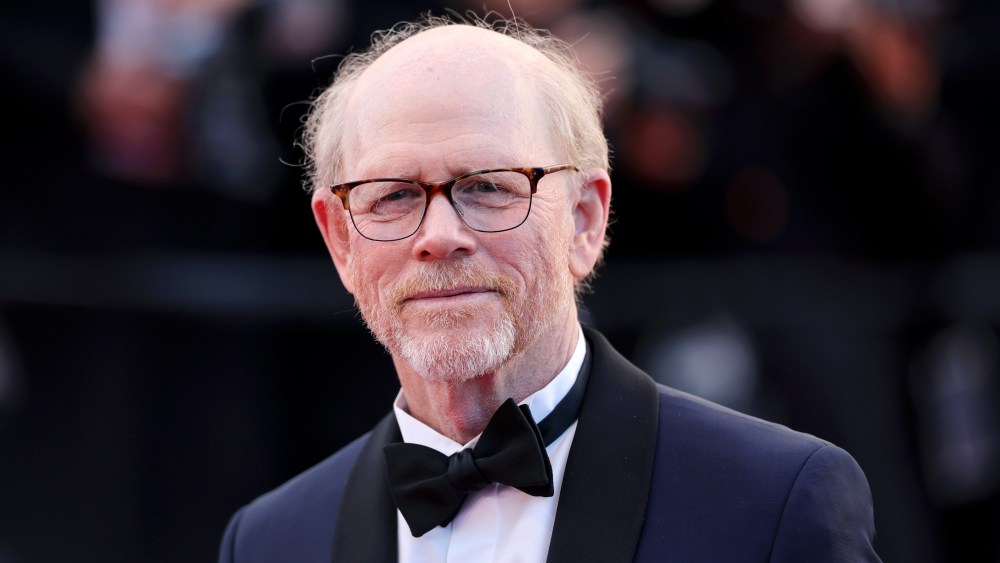
Speaking in a fireside chat with Runway co-CEO Cristóbal Valenzuela at the Runway AI Festival at New York's Alice Tully Hall, director Ron Howard stated that audience appetite will ultimately determine whether AI-generated films succeed. While acknowledging that AI technology is democratizing storytelling workflows and expanding options for creators, Howard emphasized that viewers will decide whether synthetic characters resonate in the same way live actors, CGI, or animated figures do. He addressed community concerns regarding creative displacement, urging filmmakers to experiment, collaborate, and establish clear cultural and legal standards. Furthermore, Howard noted that while generative AI promises major production efficiencies—including rapid image generation, reduced budgets, and accelerated editorial turnarounds—he has not yet observed these practical benefits materialize within his own professional filmmaking process. Valenzuela added that AI remains an opt-in tool rather than a wholesale replacement for traditional production methods.
Why it matters
Howard's assessment highlights a central friction in modern production: the gap between theoretical software capability and measurable set-level efficiency. While technology vendors frequently pitch generative AI as an immediate driver of lower budgets and faster turnaround times across preproduction, visual effects, and editorial, experienced directors are not yet seeing seamless workflow integration on high-stakes projects. At the same time, the creative question shifts from technical feasibility to narrative value. Filmmaking economics and audience investment rely on genuine connection; whether viewers will embrace fully synthetic characters or automated sequences at scale remains unproven. The choice facing productions is not binary adoption versus refusal, but determining where algorithmic tools solve specific mechanical bottlenecks without compromising creative control, legal clearances, or the craft of performance. As top-tier filmmakers test these systems, establishing reliable pipelines and clear industry guidelines will dictate whether generative methods become standard production choices.
Antique Robots take
Howard hits on the exact reality working directors face: promises of radical speed and cost reduction mean very little until they function reliably inside standard production pipelines. The industry is inundated with claims about automated turnarounds and instant imagery, but in practice, high-level film and television require total creative control, consistency, and fidelity. AI should not be treated as an inevitable replacement for traditional craft, nor should it be dismissed out of hand. It is another technique in the toolbox, alongside practical cinematography, visual effects, physical set builds, and virtual production. Whether a scene calls for an ensemble of live actors, an intricate digital composite, or an AI-assisted storyboard, the deciding factor must always be narrative impact and craft excellence, not novelty. Ultimately, audiences do not buy tickets for software demonstrations; they show up for compelling stories, and no tool substitutes for good storytelling and thoughtful execution.